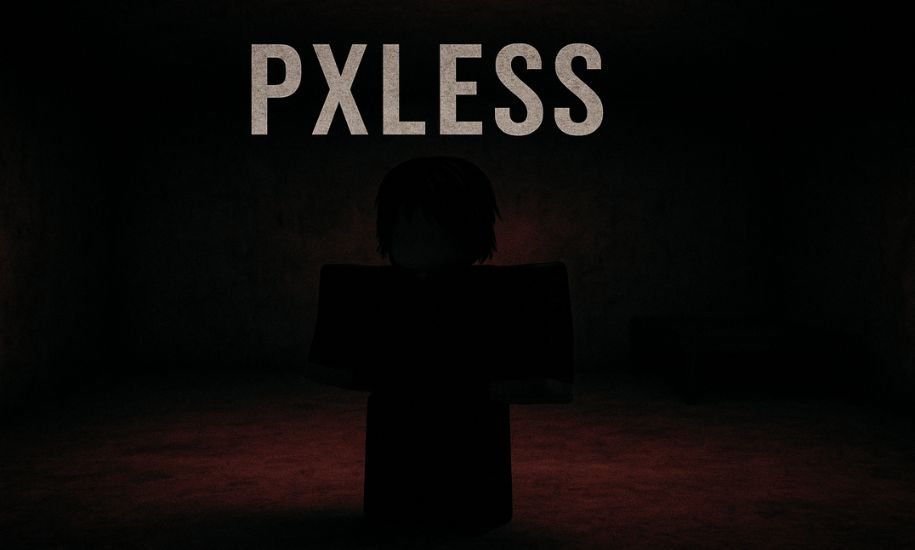
The internet loves a mystery, and the name Pxless has recently begun circulating in corners of gaming communities, particularly among Roblox fans and those who indulge in eerie, horror-themed game edits.
At first glance, Pxless seems like just another Roblox content creator—but dig a little deeper and you find a blend of aesthetic editing, unsettling atmosphere, and cryptic storytelling that captures the internet’s imagination.
“Pxless” doesn’t refer to a major gaming studio, nor is it a viral franchise. Instead, it’s an evolving persona, one built from the eerie charm of Roblox horror games and the expressive culture of social media creators.
This article explores who Pxless is, how the name became associated with “scary Roblox,” and why such enigmatic figures thrive in today’s creator economy.
The Origin of Pxless: From Edits to Influence
The earliest traces of Pxless appear not in official Roblox developer forums but in short-form video content, mainly YouTube Shorts and TikTok-style edits. These videos often feature stylized Roblox avatars moving through surreal or dark settings—sometimes melancholic, sometimes unsettling. The creator’s tag, Pxless, frequently appears in captions or hashtags like #roblox, #robloxedit, #robloxtrend, and #fyp.
Unlike traditional Roblox creators who focus on game development, scripting, or live streaming, Pxless builds a brand on mood—on moments of eerie beauty and digital fear. Each clip, lasting only seconds, delivers a strong visual punch that keeps viewers hooked.
Over time, these small fragments accumulated into a body of work. With hundreds of videos and thousands of followers, Pxless began to represent something larger than just an editing account. For some, it became a symbol of the scary side of Roblox—a corner of the gaming universe where creativity and fear merge.
Pxless and the Roblox Horror Subculture
To understand the fascination around Pxless Roblox, it’s necessary to understand the platform’s horror ecosystem. Roblox may seem like a colorful, family-friendly game engine, but it harbors a massive subculture of horror experiences—user-generated games with chilling atmospheres, jumpscares, and mysterious lore.
From titles like The Mimic and Identity Fraud to darker, more experimental projects, Roblox horror has evolved into a full-blown genre. These games thrive on imagination rather than gore, and often use lighting, sound design, and perspective to build unease.
Within this environment, creators like Pxless found a niche. They transformed gameplay footage into stylized edits—mixing slow motion, glitch effects, and melancholic music to evoke emotion rather than pure fear. The “scary” aspect of Pxless content isn’t about shock value; it’s about the uncanny. It’s the feeling that something familiar (a blocky Roblox character) suddenly feels alien, lonely, or haunted.
The Aesthetic of Fear: What Makes Pxless Scary
When viewers describe Pxless scary videos, they often refer to more than jump scares. Pxless taps into psychological horror—the quiet unease of being alone in a vast, digital world.
1. Visual Minimalism
Pxless videos often use dark tones, empty spaces, and slow transitions. The minimalism leaves viewers with a feeling of absence, aligning perfectly with the name Pxless, as if the creator has stripped away pixels, leaving a void.
2. Emotional Sound Design
Background tracks are not high-energy pop songs but haunting melodies, echoing piano notes, or distorted ambience. The soundscapes deepen immersion and create a lingering aftertaste of sadness and fear.
3. Anonymity and Mystery
Unlike many creators who show their faces or discuss personal lives, Pxless remains unseen and unheard. This anonymity enhances the mystery. Fans are left to wonder—who is Pxless? Is it one person or a small creative group? The uncertainty fuels intrigue and community speculation.
Fan Theories and the Cult of Mystery
Every mysterious online creator eventually attracts fan theories, and Pxless is no exception. In various Roblox forums and comment sections, fans debate the origins of the name and speculate about the intent behind the videos.
Some believe that Pxless is a stylized spelling of “Pixel-less,” symbolizing a creator who transcends the limitations of the digital world—someone who strips away the pixels to reveal emotion. Others think it’s simply an aesthetic username chosen for its sleek, modern look.
There are even creepier interpretations: fans claim Pxless might be linked to an upcoming Roblox horror game or that the videos are part of a larger narrative. While none of these theories have been confirmed, they add to the aura surrounding the persona.
The Role of Social Media in Pxless’s Popularity
Social platforms like YouTube Shorts, TikTok, and Instagram Reels have transformed how creators like Pxless gain traction. In traditional media, developing a reputation in gaming required years of content and active fan engagement. Now, a few viral seconds can ignite curiosity worldwide.
The rise of Pxless mirrors how Gen Z creators blur lines between art, performance, and gaming. Pxless isn’t a developer, streamer, or musician—she’s all of them in fragments. Her art exists between moments, in transitions and edits. Each video becomes both promotion and performance, keeping fans guessing what’s next.
The mysterious tone and minimalist visuals also align perfectly with algorithmic culture. Viewers scrolling through bright, chaotic feeds find a sudden dark, quiet edit by Pxless—and they stop. That pause is enough for the algorithm to push it further.
Why “Pxless Roblox” Resonates with Viewers
There’s an irony to Roblox’s reputation as a “kids’ platform.” While the surface is filled with bright avatars and social games, the undercurrent of creativity has made Roblox a thriving ground for horror experiments. Pxless captures that contradiction perfectly.
The Pxless Roblox aesthetic combines innocence and fear. The familiar blocky figures—normally cheerful—become unsettling when placed in dim light or eerie silence. Fans describe the sensation as comfortably uncomfortable, a mix of nostalgia and tension.
For younger audiences, this type of horror feels accessible. It’s not violent or explicit; it’s emotional. It suggests rather than shows. Pxless understands this balance, making her content both eerie and shareable.
The Power of Ambiguity: Identity as a Tool
In the age of personal branding, where most influencers overshare, Pxless stands out by saying less. The deliberate lack of backstory or identity invites curiosity. Every frame feels like a clue, every sound a possible message.
This approach echoes other internet phenomena—like ARGs (Alternate Reality Games) and fictional YouTube horror series such as Marble Hornets or The Walten Files. By maintaining ambiguity, Pxless taps into the participatory nature of internet culture: fans become detectives.
Her anonymity also serves as a creative shield. The persona “Pxless” becomes a digital mask, allowing experimentation with tone and theme without personal exposure. For many modern creators, especially young women in gaming spaces, that anonymity isn’t just stylistic—it’s protective.
The “Scary” Side as Artistic Expression
While some label Pxless content “scary,” it might be more accurate to call it emotionally eerie. The editing style borrows from cinematic horror rather than shock tactics. Subtle fades, glitched overlays, and slow zooms convey fragility rather than violence.
This nuance is why Pxless stands apart from typical “Roblox scary” compilations. She curates digital fear into visual poetry. The result is not terror, but reflection. Viewers feel haunted not by monsters, but by the loneliness of the online world.
In that sense, Pxless scary videos become commentaries on modern internet life—how we exist between connection and isolation, pixels and feelings. Her work demonstrates that even within Roblox, a platform built on play, there’s room for art.
Cultural Impact and Community Response
While still a small channel by mainstream standards, Pxless represents a broader cultural wave—creators turning game content into emotional art. Many young editors on YouTube now cite Pxless as inspiration, mimicking her transitions and musical choices.
Communities have formed around similar aesthetics: Roblox edits with muted palettes, melancholy music, and introspective captions. In this new era, creators are not merely showing gameplay—they’re crafting moods. Pxless happens to embody the darker edge of that movement.
Viewers’ comments reveal this connection:
-
“This feels like a dream I can’t wake up from.”
-
“Why does Roblox look so beautiful and sad at the same time?”
-
“Pxless makes horror look poetic.”
Such reactions show how digital horror has evolved. Fear is no longer about monsters; it’s about meaning.
The Future of Pxless: Creator, Myth, or Movement?
As Pxless continues to post, her following slowly grows, and with it, the mythology. Some fans anticipate collaborations with larger Roblox developers. Others predict a transition into full-length storytelling or virtual cinematics.
Whatever the direction, the Pxless brand has achieved something rare: identity through absence. She’s both visible and invisible, familiar yet alien. That duality captures the spirit of a generation raised online—half in pixels, half in emotion.
If the creator chooses to expand beyond Roblox, she could easily pivot into digital art, music production, or indie horror design. The skills that define Pxless—editing, atmosphere, narrative tension—translate beyond platforms.
The Broader Meaning of “Pxless” in the Digital Age
Beyond its association with Roblox, the word “Pxless” carries symbolic weight. In a world dominated by pixels—screens, filters, avatars—to be “pxless” is to go beyond surface visuals. It’s to focus on emotion, story, and tone.
Perhaps that’s why the name resonates. Pxless represents digital minimalism: removing clutter to expose the feeling underneath. In an internet filled with excess, she delivers restraint. That quiet approach makes her stand out more loudly than many who chase constant virality.
The concept of being “pxless” could evolve into a micro-movement, inspiring creators to build deeper emotional narratives in short-form media. It’s artistry born in seconds but remembered for moods.
Conclusion: The Quiet Fear That Connects Us
Pxless isn’t a mystery that needs solving—it’s a mirror for our digital age. Through eerie Roblox edits and quiet, melancholic horror, she reveals how beauty can live in unease. Her content invites viewers not just to watch but to feel, to confront loneliness, nostalgia, and the uncanny spaces of online life.
As audiences seek deeper meaning in digital entertainment, creators like Pxless redefine what “scary” means. It’s not about darkness alone—it’s about emotion, memory, and imagination.
Whether Pxless remains an anonymous artist or grows into a cultural icon, one thing is certain: she’s carved her place in the evolving story of Roblox and internet art.
— Article originally published on American Times
You may also visit: Kirby Dedo: The Viral Finger-Sized Meme Craze