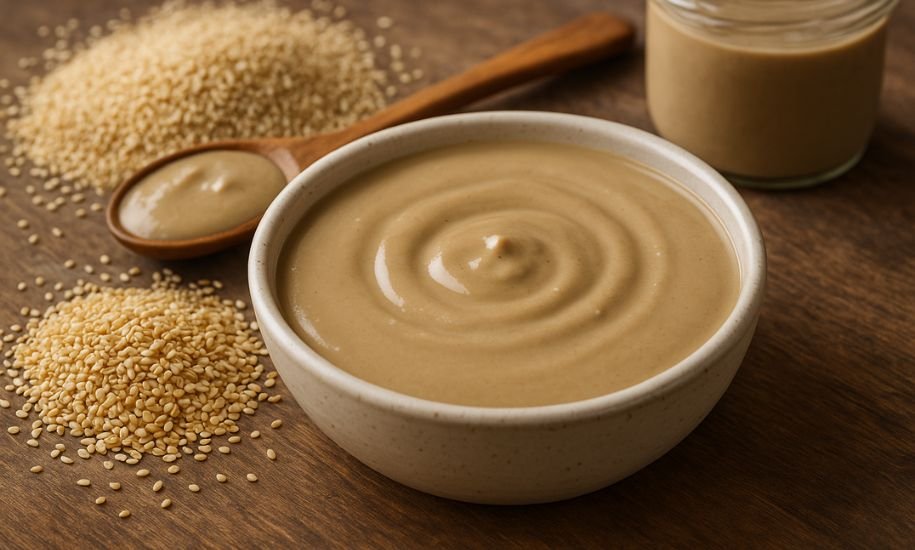
When you think of tahini, picture a smooth, creamy paste made by grinding sesame seeds into a rich, nutty spread. At its simplest, it’s just sesame seeds — either hulled or unhulled — sometimes with a touch of oil to help with texture and preservation. It might resemble nut butter like peanut or almond butter, but its flavor, roots, and uses are truly unique.
The word tahini comes from the Arabic term taḥīna, meaning “to grind.” This name perfectly captures its simplicity — ground sesame seeds turned into a velvety paste that’s both nutritious and flavorful. Tahini has been a vital ingredient in Middle Eastern and Mediterranean cuisines for thousands of years, appearing in everything from hummus and baba ghanoush to sauces, dressings, and desserts.
A Journey Through Time: History & Origins
Tahini’s story stretches back thousands of years, woven through the history of sesame seed cultivation itself. Sesame is among the oldest known oilseed crops, cultivated for over 4,000 years. Ancient Mesopotamian records mention sesame oil being used in offerings and as food. Over centuries, people across the Middle East, Persia, and the Mediterranean developed various ways to use sesame — from pressed oil to seed pastes.
By the medieval era, sesame pastes similar to modern tahini appeared in Arabic cookbooks. These pastes were prized for their rich taste and versatility, used both in savory dishes and sweets. Over time, tahini became an essential pantry staple in the Levant, Israel, Turkey, Egypt, and beyond — each region giving it a unique twist.
In the 20th century, tahini made its way into Western kitchens, where it became synonymous with hummus and later found its way into global health and vegan cuisine. Today, it sits comfortably on grocery shelves worldwide, a bridge between ancient tradition and modern cooking.
How Tahini Is Made
Creating tahini is a simple yet delicate process that highlights the natural richness of sesame seeds.
1. Cleaning the Seeds:
The process begins with carefully selected sesame seeds. They’re cleaned to remove dust, stones, or any impurities to ensure a pure, smooth product.
2. Hulling or Keeping the Skin:
Producers decide whether to use hulled or unhulled seeds. Hulled seeds create a lighter, milder paste, while unhulled seeds — with their outer coat intact — yield a darker, more robust flavor and add fiber and minerals.
3. Roasting:
Seeds are then lightly roasted to release their oils and develop aroma. The degree of roasting can greatly affect the taste — lightly roasted for a delicate flavor or deeply roasted for a strong, nutty profile.
4. Grinding:
Once roasted, the seeds are ground into a fine paste using stone grinders or modern machinery. Some producers add a small amount of oil to enhance smoothness and consistency.
5. Packaging and Storage:
The finished tahini is packaged in airtight containers. Because it’s naturally oily, the sesame oil often separates to the top — a sign of purity rather than spoilage. A good stir brings it back to the perfect creamy consistency.
High-quality tahini should taste nutty, slightly earthy, and not bitter. A smooth texture and balanced flavor indicate skilled preparation and quality seeds.
Types, Varieties, and Flavor Profiles
Tahini isn’t just one uniform product. It comes in several forms that cater to different tastes and recipes.
-
Hulled Tahini: Made from sesame seeds without their outer husk. The result is a lighter-colored paste with a mild flavor and smooth texture.
-
Unhulled Tahini: Made from whole sesame seeds, producing a darker paste with a stronger, slightly bitter taste. It’s higher in fiber, calcium, and nutrients.
-
Raw Tahini: Made from unroasted sesame seeds, resulting in a paler paste with a delicate, almost sweet taste.
-
Roasted Tahini: The most common type, with a deeper flavor due to lightly toasted seeds.
-
Regional Varieties: Some Middle Eastern versions are deeply roasted, producing what’s known as “red tahini.” Other regional variations might use slightly different grinding or roasting techniques, giving unique textures and aromas.
No matter the type, a good tahini should pour easily, taste creamy, and have a clean sesame aroma — never burnt or overly bitter.
Nutritional Profile and Health Benefits
Tahini isn’t just delicious; it’s also a powerhouse of nutrition.
Per tablespoon (about 15 grams):
-
Calories: 90–100 kcal
-
Fat: 8–9 grams (mostly healthy unsaturated fats)
-
Protein: 2–3 grams
-
Carbohydrates: 2–3 grams
-
Fiber: 1–2 grams
-
Rich in minerals such as calcium, iron, magnesium, phosphorus, and copper
Tahini is plant-based and nutrient-dense, making it ideal for vegetarian and vegan diets. The unsaturated fats support heart health, while sesame lignans — like sesamin and sesamolin — have antioxidant and anti-inflammatory properties.
Tahini also provides valuable minerals for bone strength and energy metabolism. Its combination of healthy fats, fiber, and protein makes it both satisfying and nourishing.
A few cautions:
-
Tahini is calorie-rich due to its fat content, so moderate use is best.
-
Sesame allergies are increasingly recognized, so caution is necessary for those with sensitivities.
-
Always store tahini properly to prevent rancidity — cool, dry places work best.
Culinary Uses: From Savory to Sweet
Tahini’s versatility in the kitchen is unmatched. Its creamy texture and rich flavor make it suitable for both savory and sweet dishes.
Savory Uses:
-
Sauces & Dressings: Combine tahini with lemon juice, garlic, salt, and water for a simple sauce. It pairs beautifully with roasted vegetables, salads, and grilled meats.
-
Dips: The iconic hummus and baba ghanoush both rely on tahini for their creamy texture and nutty depth.
-
Spreads & Marinades: Use tahini in wraps, on sandwiches, or as a base for marinades and grain bowls.
-
Soups & Stews: A spoonful of tahini adds richness and body to soups without dairy.
Sweet Uses:
-
Halva: A traditional Middle Eastern sweet made with tahini and sugar, known for its crumbly texture and nutty sweetness.
-
Baked Goods: Incorporate tahini into cookies, brownies, or banana bread for a unique sesame flavor.
-
Breakfasts: Spread tahini on toast or drizzle over oatmeal with honey or dates for a nutrient-packed start.
Modern Trends:
Tahini has moved beyond traditional dishes — it’s now used in smoothies, ice cream, lattes, and even coffee drinks. Its natural creaminess makes it a popular plant-based substitute for butter, cream, or dairy in vegan recipes.
Buying, Storage, and Quality Tips
Choosing good tahini makes a world of difference in taste and performance. Here’s what to look for:
1. Ingredient Simplicity:
The best tahini contains just one ingredient — sesame seeds. Avoid versions with added sugars, unnecessary oils, or preservatives.
2. Texture & Appearance:
A smooth, pourable texture is ideal. Oil separation is normal; just stir it well before use. A gritty or dry texture often signals old or low-quality product.
3. Flavor:
Taste your tahini before cooking with it. It should be nutty and slightly earthy, not bitter or burnt.
4. Storage:
Store unopened tahini in a cool, dark place. After opening, keep it tightly sealed. Refrigeration extends freshness but can make it thicker — simply let it warm to room temperature before using.
5. Shelf Life:
Tahini can last up to two years unopened, and about six to twelve months after opening, depending on storage conditions.
6. Substitutes:
In a pinch, you can use sunflower seed butter or nut butters like almond or cashew. However, these won’t fully replicate tahini’s distinct sesame flavor.
Why Tahini Matters in Global Food Culture
Tahini isn’t just a food — it’s part of cultural identity across regions. In the Middle East, it’s a symbol of hospitality, used in everyday meals and festive dishes alike. Traditional tahini presses, some still operated by families for generations, show how deeply rooted this food is in community and heritage.
In recent decades, tahini has transcended borders. It has become a global ingredient found in homes and restaurants worldwide. Modern chefs and home cooks value it for its versatility — equally at home in vegan desserts, hearty Mediterranean bowls, or fusion creations.
The rise of health-conscious and plant-based eating has also boosted tahini’s popularity. It’s gluten-free, dairy-free, and full of natural, whole-food ingredients — aligning perfectly with today’s clean eating trends.
Tahini has evolved from a local staple to an international symbol of culinary connection, bridging ancient traditions with modern tastes.
How to Use Tahini in Everyday Cooking
Here are a few practical tips for getting the best out of your tahini:
-
Stir Before Use: Oil naturally separates — stir until smooth.
-
Balance Flavors: If your tahini tastes bitter, balance it with lemon juice, salt, or a touch of sweetener.
-
Make a Quick Sauce: Mix tahini with lemon juice, garlic, and water for an instant dressing or drizzle.
-
Boost Nutrition: Add a tablespoon to smoothies, soups, or oatmeal for extra healthy fats and protein.
-
Experiment: Use tahini in cookies, energy balls, or even ice cream — its earthy flavor pairs beautifully with chocolate or dates.
-
Pair Smartly: Tahini complements flavors like citrus, herbs, honey, garlic, and roasted vegetables.
Once you start using tahini creatively, you’ll find it works almost anywhere — it’s truly a global pantry hero.
Final Thoughts
From humble sesame seeds to a beloved kitchen staple, tahini’s journey is both ancient and ongoing. It represents the beauty of simplicity — just one ingredient transformed into something deeply flavorful, nutritious, and adaptable.
Tahini is more than food. It’s a story of tradition, migration, innovation, and connection — linking ancient cultures to modern plates. Whether it’s in hummus, a dessert, or your morning smoothie, tahini embodies the timeless joy of wholesome, global cooking.
For more food stories, cultural insights, and culinary inspiration, visit my blog — American Times.
You may also read: Palentu: From Rustic Comfort Food to Modern Workflow Platform