In the ever-evolving arena of tactical shooters, aesthetics are no longer just an afterthought. For many Rainbow Six Siege players, operator customization—how their gear, weapons, and uniforms look—has become a statement of identity and style. Ubisoft’s introduction of the R6 Market revolutionized this aspect of the game, giving players a legitimate space to buy and sell cosmetics.
This isn’t just about fashion—it’s the beginning of a player-driven digital economy within one of the most competitive games in the world. The R6 Market has changed how gamers perceive value, rarity, and ownership in Rainbow Six Siege.
What Is the R6 Market?
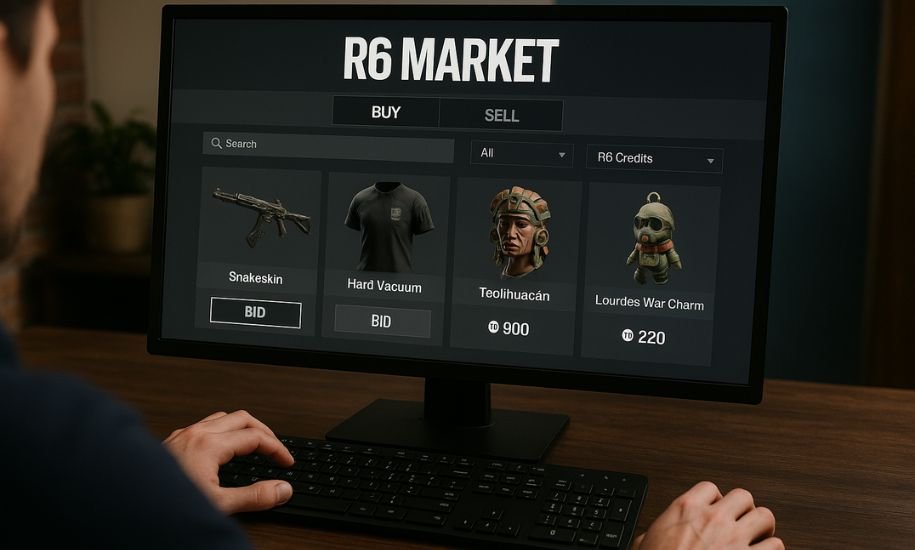
The R6 Market is Ubisoft’s official peer-to-peer trading platform for Rainbow Six Siege. It allows players to buy and sell in-game cosmetic items such as weapon skins, uniforms, charms, and headgear using R6 Credits, the game’s premium virtual currency.
Previously, cosmetics in Rainbow Six Siege were single-account assets—once owned, they were locked permanently to your profile. Now, with the R6 Market, players can exchange those assets for other items or R6 Credits. This system transforms what was once a static inventory into a dynamic marketplace with real supply and demand.
Essentially, Ubisoft has created a controlled, in-house ecosystem that functions much like trading markets seen in other titles—but with clear safeguards and rules. The result is a more fluid and strategic in-game economy.
How the R6 Market Works
Access Requirements
To participate in the R6 Market, players must meet a few conditions:
-
Age requirement: Players must be at least 13 years old.
-
Progress requirement: They must have reached Level 25 in Rainbow Six Siege.
-
Security requirement: Two-Factor Authentication (2FA) must be enabled on their Ubisoft account, along with a verified recovery email.
These requirements protect users from fraudulent activity and ensure that participants are experienced enough to understand the system.
Buying and Selling Items
Buying:
Players can browse through a large catalog of available cosmetics on the R6 Market. When they find an item they want—say, a rare weapon skin—they can either:
-
Place a Bid: Set the maximum number of R6 Credits they are willing to pay. The system automatically matches the buyer to the lowest seller offering the item within that price range.
-
Instant Purchase: Buy at the lowest current selling price if they prefer immediate acquisition.
Selling:
Players with unused or valuable items can list them for sale. They select the item in their inventory, choose the “Sell” option, and enter the price they want in R6 Credits. The marketplace then displays their listing to all buyers.
The market is driven by supply and demand—rare skins or operator sets may sell quickly at high prices, while more common items might take longer to move.
Fees and Order Management
The R6 Market operates with a 10% transaction fee deducted from every completed sale. This means if you sell an item for 1,000 R6 Credits, you receive 900 Credits.
Orders—both buy and sell—are typically time-limited, expiring after around 30 days. If an item doesn’t sell within that period, the listing can be adjusted and relisted.
While buyers don’t pay direct fees, sellers need to factor in the commission when setting prices to maintain profitability.
The Value and Impact of the R6 Market
Unlocking In-Game Value
The R6 Market’s primary innovation is that it unlocks value trapped in old or unused cosmetics. Instead of hoarding unwanted skins, players can now convert them into R6 Credits—creating a fluid in-game economy.
Collectors gain a way to hunt down older event items, while newer players can catch up by buying past cosmetics that were once unobtainable.
Rarity, Demand, and Speculation
Each skin or item has its own “micro-economy.” Demand spikes during seasonal events or esports tournaments, especially when certain operators or designs are trending. Conversely, when new cosmetics flood the market, prices may drop.
Players who monitor trends closely can buy low and sell high, effectively speculating on the game’s fashion market. It adds a strategic dimension to the cosmetic layer—players are no longer just showing off; they’re also making economic decisions.
Empowering Player Agency
For years, Ubisoft dictated what cosmetics were available in the store and at what price. The R6 Market changes that dynamic: players now decide which items have value, how much they are worth, and when to buy or sell them.
This shift fosters player empowerment, giving the community direct control over the game’s aesthetic economy.
Buyer and Seller Strategies
For Buyers
-
Monitor Price Trends: Keep an eye on average prices before placing a bid. The lowest price isn’t always the best deal if a skin’s value is trending downward.
-
Capitalize on New Seasons: During new season launches, older skins often see price dips as players focus on newer items. This is a perfect time to buy.
-
Filter and Search Efficiently: Use filters by rarity, operator, or event to narrow your hunt and avoid impulse purchases.
-
Patience Pays: Good deals often appear when you wait—set a reasonable maximum bid and let the market meet you halfway.
For Sellers
-
Sell in Demand: Skins tied to popular operators or limited-time events generally sell faster and at higher prices.
-
Undercut Wisely: Small undercuts (10–50 credits below current listings) can ensure your item sells quickly without drastically hurting profit.
-
Time Your Listings: The marketplace fluctuates; posting during peak hours or event periods can lead to faster sales.
-
Relist Strategically: If your listing expires, adjust the price and relist rather than waiting for buyers to appear.
For Everyone
-
Use Two-Factor Authentication: Security is crucial—never trade outside the official marketplace.
-
Stay Updated: Seasonal updates and operator reworks influence demand for specific cosmetics.
-
Treat It as In-Game Value: The R6 Market is not for real-world profit; R6 Credits cannot be withdrawn or converted into cash.
Market Dynamics and Comparisons
The R6 Market shares similarities with trading ecosystems in other competitive games, yet it’s uniquely structured.
-
Centralized vs. Decentralized Systems: Unlike other franchises that rely on third-party marketplaces, Ubisoft’s R6 Market is fully centralized, ensuring controlled pricing, fees, and secure transactions.
-
Unified Currency: Transactions occur solely in R6 Credits, maintaining an even economic footing for all players.
-
Accessibility: The marketplace is directly linked to Ubisoft accounts, eliminating the need for external trading platforms or third-party verifications.
These factors keep the economy stable, transparent, and fair for both casual players and high-volume traders.
The Broader Significance of the R6 Market
Enhanced Player Engagement
The introduction of trading encourages players to stay active in Rainbow Six Siege even between major content drops. Players log in not only to play but also to check market movements, prices, and opportunities.
It transforms the player experience from pure gameplay into a meta-game of trading and collection.
Economic Sustainability
Ubisoft benefits too: every transaction involves R6 Credits, which are purchased with real money. The company earns revenue while players retain value through active trading. This symbiotic relationship strengthens the overall game economy and supports long-term development.
Community and Social Impact
Communities have formed around price discussions, trading tips, and valuation analysis. Players discuss market trends, rare items, and profitable flips, fostering engagement beyond the usual tactical discussions.
It’s not just a shooter anymore—it’s a social ecosystem with its own economy.
Risks and Limitations
While the R6 Market offers many benefits, players should be aware of its limitations.
-
Not All Items Are Tradable: Some cosmetics remain exclusive to certain bundles or events and may never appear on the marketplace.
-
Market Saturation: When too many players list the same item, prices drop rapidly, leading to potential losses.
-
Speculative Risks: Just like real-world markets, predicting price movement is uncertain. A skin that seems rare today may lose value if it returns in future updates.
-
No Real-Money Profit: You can only earn R6 Credits, not actual currency.
-
Security and Regulation: Ubisoft monitors for fraud, bots, and unfair behavior; violating terms can result in account restrictions.
Understanding these risks ensures a healthy, sustainable approach to trading.
Future of the R6 Market
The marketplace is still in its early stages, but its success signals that player-driven economies are here to stay. Several trends may define its evolution:
-
Deeper Analytics: Expect better price charts, volume data, and trend trackers to help players make informed trading decisions.
-
Expanded Item Pool: More skins, bundles, and seasonal exclusives will likely become tradable as Ubisoft expands eligibility.
-
Cross-Platform Integration: Unified accounts and trading across PC, Xbox, and PlayStation could further grow market participation.
-
Esports Tie-Ins: Event-related cosmetics linked to professional teams or tournaments may rise in value and become major market drivers.
-
Improved Security: As trading grows, Ubisoft will likely refine its anti-bot systems and protection protocols.
The R6 Market is poised to evolve into a sophisticated trading hub, not just a feature—possibly even setting a standard for other online titles.
The Psychology of Trading and Ownership
One of the most fascinating outcomes of the R6 Market is the shift in how players view their cosmetics.
Previously, skins were static expressions of style—something you wore and forgot. Now, they’re assets. This psychological transformation adds a layer of pride, strategy, and investment. Players begin to curate their inventories like portfolios, balancing personal favorites with valuable tradables.
This hybrid mindset—part collector, part trader—deepens engagement and loyalty to the game. Even for those who never intend to “profit,” the simple knowledge that their skins have value adds meaning to their purchases.
Final Thoughts
The R6 Market has reshaped Rainbow Six Siege’s cosmetic landscape, transforming it from a static store system into an active, player-powered economy. It allows gamers to breathe new life into old items, encourages strategic decision-making, and connects a global community of collectors and traders.
While challenges such as market saturation, speculative risk, and in-game-only currency remain, the advantages are undeniable. Players now have agency, choice, and flexibility in how they engage with cosmetics—a major step forward for the game and its community.
Whether you’re a casual player looking to sell unused items, a collector hunting rare skins, or a strategist trying to maximize your R6 Credits, the marketplace offers endless possibilities.
The R6 Market isn’t just an addition—it’s a transformation, turning Rainbow Six Siege into not just a tactical shooter but an evolving economic ecosystem of its own.
Written for American Times.
You may also visit: Pxless: The Mysterious Roblox Creator Redefining Digital Fear