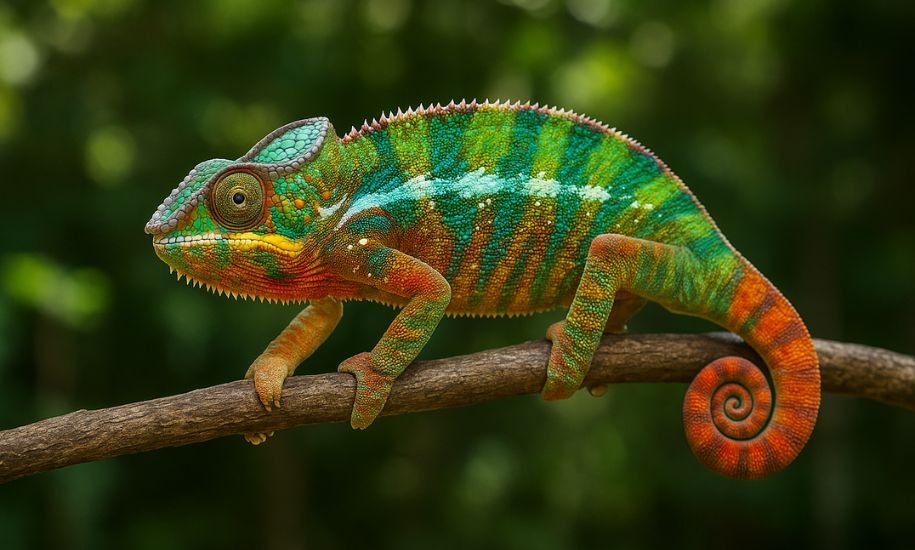
The animal kingdom is filled with extraordinary creatures, but few captivate human imagination as powerfully as chameleons. Their shifting colors, hypnotic eyes, and slow, deliberate movements make them look almost unreal—like tiny living works of art crafted by nature. The scientific family name for true chameleons is Chamaeleonidae, but in Slovak the group is known as chameleónovité. This family includes around 200 described species spread across Africa, Madagascar, Asia, and parts of southern Europe. They represent one of the most unique evolutionary paths among modern reptiles.
This long-form article explores everything that makes chameleónovité so fascinating: from their biological adaptations and evolutionary roots to their behavior, reproduction, ecological roles, and the threats they face today. By understanding their world, we gain a deeper appreciation for these iconic “masters of camouflage.”
Origin, Distribution, and Evolutionary Significance
Chameleónovité belong to the order Squamata, which includes lizards and snakes. Their evolutionary lineage diverged millions of years ago, gradually shaping them into highly specialized and arboreal reptiles. The greatest diversity of species occurs on Madagascar, where more than half of all known chameleónovité species live—and many are endemic. This means they cannot be found anywhere else on Earth.
Beyond Madagascar, chameleónovité occupy broad portions of Africa—including savannas, rainforests, and mountainous regions—as well as the Middle East and parts of southern Europe. The common chameleon (Chamaeleo chamaeleon) is the only naturally occurring European species, especially well-known from Mediterranean habitats.
Human activity has introduced certain species into new environments, such as Hawaii or parts of the United States. Their adaptability, combined with their specialized physiology, has allowed them to establish small but stable populations outside their native ranges.
The diversity within chameleónovité is remarkable: from the tiny Brookesia nana, only a few centimeters long, to large and vividly colored species like Furcifer pardalis, chameleónovité showcase the beauty and creativity of evolutionary processes.
Unique Physical Adaptations
Chameleónovité are not just visually striking—they are evolutionary wonders. Their bodies are equipped with structures and mechanisms found nowhere else in the animal kingdom.
1. Independently Moving Eyes
One of the most iconic adaptations of chameleónovité is their independently movable eyes. Each eye can rotate and focus separately, giving the chameleon a full 360-degree field of vision. This allows them to scan for prey and predators simultaneously without moving their bodies.
When they decide to strike at prey, the eyes synchronize and lock onto a single target, enabling perfect depth perception.
2. Zygodactyl Limbs for Precision Grip
Chameleónovité have highly specialized limbs where the toes are fused into two opposable groups—much like a pair of pincers. This system, called zygodactyly, allows them to grasp branches securely. Every step they take is measured and precise, allowing them to navigate even the thinnest twigs without falling.
3. Prehensile Tail
The tail of chameleónovité species acts as a fifth limb. It is muscular, flexible, and able to wrap around branches for extra support. This adaptation is vital for their arboreal (tree-dwelling) lifestyle.
4. A High-Speed Projectile Tongue
If chameleónovité are known for anything besides their colors, it is their incredible hunting mechanism. Their tongue—sometimes as long as their entire body without the tail—can shoot out in less than 0.1 seconds. A sticky suction-like tip grabs the prey instantly.
This rapid-fire hunting technique makes chameleónovité among the most efficient insect predators in the reptile world.
5. Color-Changing Skin: Communication, Not Just Camouflage
Many people believe chameleónovité change color only to blend into their surroundings. While camouflage plays a role, the true reasons are far more complex and fascinating.
They change colors to:
-
regulate body temperature
-
express emotions (calm, fear, stress)
-
attract mates
-
show dominance or submission
-
warn off competitors
-
coordinate social interactions
Their color-shifting ability is made possible by iridophores, skin cells containing reflective crystals that rearrange to produce different wavelengths of light. This biological nanotechnology creates everything from subtle greens to vivid blues and fiery reds.
Behavior and Lifestyle
Chameleónovité are primarily solitary and territorial reptiles. They prefer calm environments and typically do not tolerate other chameleons nearby—except during breeding seasons.
Diurnal Activity
Unlike many lizards, chameleónovité are active during the day. They spend their mornings warming up under sunlight, then slowly move through vegetation in search of insects, spiders, and occasionally small vertebrates.
Their characteristic swaying walk resembles a leaf moving in the breeze—an effective camouflage strategy.
Nighttime Habits
At night, chameleónovité become lighter in color and rest on exposed branches. This behavior is not only tied to their physiology but also helps them avoid predators, who have difficulty spotting them on thin branch tips.
Diet
Most chameleónovité species are insectivores. Larger species may consume:
-
small birds
-
little lizards
-
larger insects
-
sometimes other chameleons
Their slow movement is compensated by their extraordinary tongue speed, turning them into efficient ambush predators.
Reproduction and Life Cycle
The reproductive strategies of chameleónovité are impressively diverse.
Egg-Laying Species
Most chameleónovité are oviparous, meaning they lay eggs. Females deposit eggs into soil or protected areas. Incubation periods vary widely but often last several months to a full year, depending on species and climate.
Live-Bearing Species
Some species, such as the Jackson’s chameleon, are ovoviviparous—eggs develop inside the female, and she gives birth to live young. This adaptation is advantageous in cooler climates where soil temperatures may not be ideal for incubation.
Mating Behavior
Male chameleónovité often become dramatically more colorful and aggressive when courting females. They flare their bodies, bob their heads, and display their brightest patterns to stand out.
Growth and Independence
Baby chameleónovité hatch fully independent. They grow rapidly, reaching adulthood within one to two years. Lifespans vary from a few years in small species to more than a decade in larger captive individuals.
Notable Species of Chameleónovité
1. Panther Chameleon (Furcifer pardalis)
Famous for its intense colors and regional variations across Madagascar. Often featured in documentaries due to its striking appearance.
2. Common Chameleon (Chamaeleo chamaeleon)
The only naturally occurring chameleon species in Europe, found mainly around the Mediterranean Basin.
3. Pygmy Chameleons (Brookesia spp.)
These miniature members of chameleónovité can be as tiny as 2–3 cm. Many inhabit forest floors rather than trees.
Threats and Conservation
Despite their adaptability, chameleónovité face numerous threats.
1. Habitat Loss
Deforestation, agriculture, mining, and urban expansion have greatly reduced available habitats—especially on Madagascar.
2. Illegal Pet Trade
Although many countries regulate trade under CITES, illegal capture still endangers wild populations.
3. Climate Change
Altered temperatures, drought, and changing ecosystems impact insect availability and breeding success.
4. Predation
Introduced species such as cats, rats, or certain birds have become major predators, especially for tiny species.
Conservation organizations are working in biodiversity hotspots to preserve forests, monitor chameleónovité populations, and educate local communities.
Conclusion: Why Chameleónovité Matter
Chameleónovité represent one of the most extraordinary evolutionary success stories in the reptile world. Their adaptive bodies, complex communication systems, and ecological importance make them a vital part of global biodiversity. But these wonders of nature are increasingly vulnerable. Protecting their habitats, regulating wildlife trade, and raising ecological awareness are essential steps in preserving these remarkable creatures.
For more detailed wildlife articles and in-depth nature insights, be sure to visit American Times.