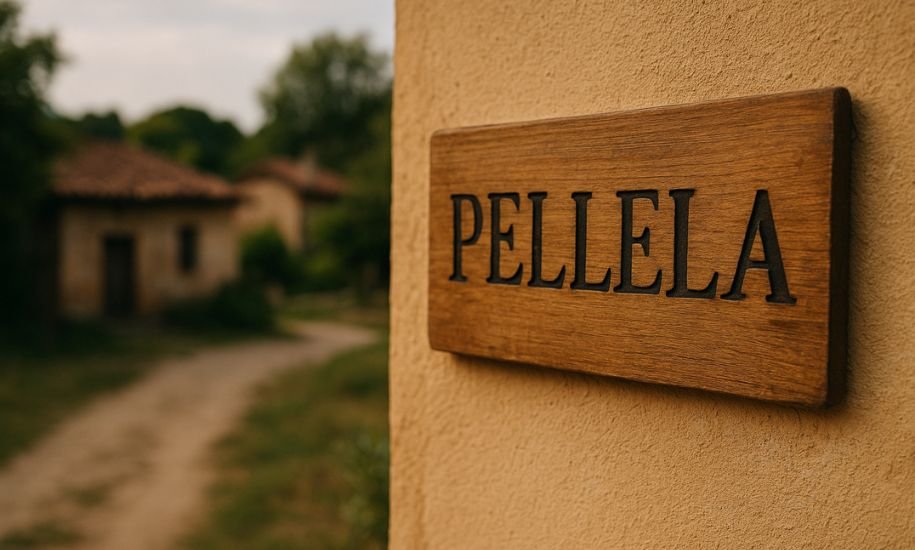
If you’ve ever stumbled across the word Pellela, you might have paused for a moment, letting its soft rhythm echo in your mind. What exactly is Pellela? Is it a place, a name, a brand, or simply a feeling? In today’s connected world, Pellela has begun to take on many shapes — part myth, part identity, part inspiration. It represents how a single word can weave together tradition, culture, and modern meaning.
The Sound and the Feel
Before trying to define Pellela, it helps to listen to it. The sound itself has a melodic quality — the double “l,” the light “-la” at the end — that feels warm and inviting. It’s gentle, rhythmic, and soothing, almost like a name meant to be spoken softly around a fire. Words like this tend to linger in the mind because they are musical, memorable, and emotional.
This sound quality gives Pellela an aura of comfort and calm. It feels like something familiar even when you’ve never heard it before. Linguistically, that makes it perfect for symbolic use — whether in storytelling, art, or branding. Pellela is a word that seems to carry emotion in its sound.
Pellela as Place and Tradition
Many online essays and cultural commentaries describe Pellela as if it were a small village — a quiet, humble place tied to tradition, where people still live close to the rhythm of nature. The imagery is vivid: red-tiled roofs, narrow paths, evening lamps, and laughter carried by the wind. Even though no official record identifies a town spelled exactly as “Pellela,” this recurring description has shaped how people perceive it.
There are villages with similar names in southern India, and those may have inspired the association. But beyond geography, Pellela has become an idea of home — the archetype of a village where time moves gently, where values endure, and where heritage is lived rather than displayed.
Seen this way, Pellela stands for more than a dot on a map. It is a metaphor for belonging, for the places that live in memory and emotion rather than in geography. When writers describe “the village of Pellela,” they are speaking about a universal longing for community and connection.
Culture, Identity, and Modern Meaning
The appeal of Pellela in modern writing lies in its flexibility. It can mean many things at once — a place, a concept, or even a feeling. Some treat it as a cultural symbol, representing warmth, simplicity, and authenticity. Others see it as a creative word that could easily become the name of an artisan brand, a lifestyle movement, or a mindfulness project.
What unites all these interpretations is the sense of grounding. Pellela carries the aura of handmade craft, of culture, of roots. It reflects the values that modern audiences increasingly seek: mindfulness, local identity, and emotional depth.
In lifestyle writing, Pellela has been used to symbolize calm and contentment — the idea of living a grounded life connected to both people and place. In branding, it evokes authenticity and trust. And in creative writing, it becomes a poetic placeholder for “the home that calls to the heart.”
Why Pellela Resonates Today
We live in a world of constant motion — digital feeds, fast trends, urban rush. In such a landscape, a word like Pellela feels like an anchor. It carries a quiet reminder of slower rhythms, of the human need for belonging and purpose.
Several modern currents converge around the concept of Pellela:
-
Authenticity: In a time when everything feels mass-produced, Pellela stands for the real, the handcrafted, the rooted.
-
Cultural depth: It evokes the traditions that survive through generations — food shared, songs sung, festivals celebrated.
-
Emotional connection: It speaks to our longing for community, identity, and continuity.
-
Versatility: Because it is open-ended, Pellela can mean different things to different people — a place, a mindset, a story.
These layers of relevance make Pellela more than a word. It becomes a small cultural symbol that mirrors our shared search for meaning.
The Many Layers of Pellela
To understand why Pellela has found a foothold in the imagination, it helps to look at its layers of meaning:
-
Sound and image: Its soft syllables and gentle tone make it memorable and pleasant.
-
Place and heritage: It evokes imagery of rural life, tradition, and home — even when not tied to a real location.
-
Identity and values: It symbolizes authenticity, warmth, and connection.
-
Modern adaptation: It lends itself naturally to creative projects, brands, and artistic interpretations.
Each of these layers adds texture to the name, turning Pellela from a simple word into a story of belonging.
Pellela in the Digital Imagination
Across blog posts, essays, and lifestyle reflections, Pellela has appeared in narratives that sound personal and nostalgic. Writers often begin by describing their first encounter with the word, as if discovering something ancient and meaningful. The pattern is the same: curiosity, reflection, and then a gentle sense of recognition.
This pattern shows how Pellela has become a part of online storytelling — a symbol people use to express calmness, heritage, and connection. It may not have an official dictionary meaning, but it has achieved something arguably more powerful: emotional presence.
Just as some invented words in literature come to stand for whole ideas or emotions, Pellela has entered that category of expressive language that works more through feeling than definition.
Interpreting Pellela Critically
Yet it’s important to approach such terms with balance. Pellela’s rise is largely a digital phenomenon, supported by creative interpretation rather than verified record. The idea of Pellela as a village or surname appears mostly in recent writings without historical citations.
But that doesn’t make it meaningless. On the contrary, it shows how language evolves in real time. A word can travel from obscurity to cultural symbol through repetition, creativity, and collective imagination. Pellela may have started as a rare surname, but the internet gave it new life as an emblem of identity and mindfulness.
That fluidity is part of what makes modern language fascinating. Words no longer need to be old to be meaningful — they only need to resonate. Pellela resonates because it represents something people want to return to: simplicity, tradition, and belonging.
The Uses of Pellela
Writers, artists, and entrepreneurs can find several uses for the concept of Pellela:
-
In creative writing: As a metaphor for belonging, serenity, or heritage.
-
In branding: As a name that conveys trust, warmth, and craftsmanship.
-
In design and art: As an aesthetic symbol for slow living and cultural continuity.
-
In lifestyle discussions: As shorthand for the balance between roots and modernity.
-
In community projects: As a banner for local identity and sustainable culture.
Each of these applications extends Pellela’s meaning beyond words, turning it into something lived and shared.
Final Thoughts
In the end, Pellela stands for the quiet beauty of connection — between sound and sense, past and present, self and community. It’s a word that may have no single birthplace, yet it feels universally at home. It reminds us that language is alive, that words are not only definitions but vessels of emotion and imagination.
Pellela may not appear in old records or atlases, but it exists in the shared imagination of those who write about it, dream of it, and find meaning within it. It is both an echo of heritage and a sign of modern creativity — a reminder that the simplest words can hold worlds inside them.
And as culture keeps shifting, Pellela will likely keep evolving: sometimes as a brand, sometimes as a symbol, sometimes as an idea of the home we all seek.
For more reflections on language, culture, and the stories that connect us, stay tuned to American Times — where words continue to find their meaning.