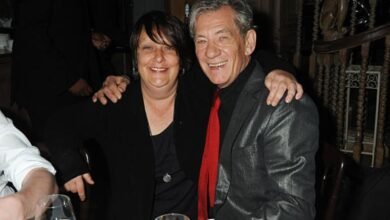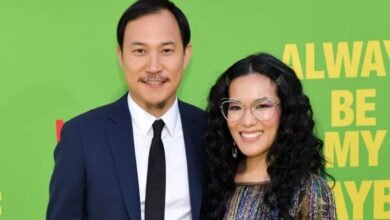
Rumors can take on a life of their own—especially when they involve a celebrity as well-known as Lee Mack. In recent months, one odd claim has surfaced repeatedly online: that Lee Mack’s wife is blind. The phrase “lee mack wife blind” has become a search trend, yet when we examine it closely, there’s no credible source or verified account supporting it. What exists instead is a misunderstanding or misreporting that spiraled into Internet folklore.
This article explores who Lee Mack’s wife, Tara McKillop, really is, what we know about their marriage, and clears up the confusion while also touching on other popular questions about Lee Mack—his vegan lifestyle, wedding photos, and net worth.
Who Is Tara McKillop?
Lee Mack, whose real name is Lee Gordon McKillop, met Tara McKillop (née Savage) while they were both studying drama at Brunel University in the mid-1990s. The two began dating in 1996 and eventually married in 2005. Together, they have three children—Arlo, Louie, and Millie—forming what those close to them describe as a grounded and private family.
Unlike her husband, Tara McKillop keeps a very low public profile. She rarely appears in interviews and seldom accompanies him to press events, preferring to stay out of the limelight. Friends and colleagues of Lee have described her as supportive but private—a person who values family life over public attention. Because of this quiet lifestyle, not much is publicly known about her day-to-day activities or professional background.
Debunking the “Lee Mack Wife Blind” Rumor
The Internet thrives on sensationalism, and one example is the persistent rumor that Lee Mack’s wife is blind. However, there is no record—no interview, official statement, or credible publication—that confirms any form of visual impairment. The claim appears to have originated from gossip blogs and low-quality content farms, where facts are often twisted to attract clicks.
In reality, the couple has lived a largely private but happy life for over two decades. None of the comedian’s numerous public appearances or televised interviews have ever referenced his wife being blind, nor have there been any verifiable medical disclosures or family statements suggesting it. It is therefore safe to conclude that the “lee mack wife blind” claim is entirely unfounded.
This serves as a reminder of how misinformation can easily circulate in the digital age—especially when it involves public figures who guard their personal lives. Tara McKillop’s choice to remain private has likely made her a target for speculation, but reliable evidence simply does not exist to support these rumours.
What Does Lee Mack’s Wife Do?
Another frequent search query—“what does Lee Mack’s wife do?”—stems from the same curiosity that drives much celebrity gossip. In truth, Tara McKillop’s professional life has not been publicly documented. Unlike many partners of high-profile entertainers, she has chosen not to pursue a public career or media presence. Most reports simply describe her as a devoted spouse and mother.
Some accounts suggest that she met Lee Mack while pursuing drama, implying she may have once shared an interest in the performing arts. However, after Lee’s career began to take off—particularly through shows like Not Going Out—Tara seems to have chosen to prioritize family life and remain behind the scenes. Her absence from tabloids and social media supports the impression of someone content to live quietly and without public fanfare.
Lee Mack’s Vegan Lifestyle
Aside from comedy, another aspect of Lee Mack’s life that intrigues fans is his veganism. Over the last few years, Lee has described himself as vegan in interviews and podcasts, including discussions about ethical living and lifestyle choices. He has spoken candidly about shifting his habits toward compassion for animals and sustainability.
He has even mentioned feeding his dogs a vegan diet, reflecting a consistent ethical approach to his beliefs. While he occasionally jokes about not being “the perfect vegan” in typical Lee Mack fashion, his public comments and event appearances show that his decision to go vegan is genuine and long-term.
For many of his fans, this revelation added another layer to his personality—one that goes beyond his quick wit and comedic timing. It also makes him one of a growing number of British entertainers who have adopted plant-based lifestyles for moral or environmental reasons.
Lee Mack and Tara’s Wedding and Family Life
Lee Mack and Tara McKillop’s wedding took place in 2005, almost a decade after they met. The ceremony was private, attended only by close friends and family. Unlike many celebrity weddings, there were no magazine spreads, interviews, or TV coverage. The couple chose to celebrate their commitment quietly, away from cameras—a decision that remains consistent with how they’ve lived their lives since.
As a result, there are no publicly available “Lee Mack wedding photos.” The few images circulating online are red-carpet photographs or paparazzi shots taken at entertainment events long after their marriage. While fans might be curious about what the wedding looked like, the lack of official photos reflects the couple’s strong desire for privacy.
The McKillops have since raised three children together, and Lee has occasionally joked on talk shows about being a father later in life. He often credits Tara with keeping him balanced amid his busy television career, suggesting their marriage is built on shared humor, respect, and a desire for a stable family environment.
Lee Mack’s Net Worth
When it comes to Lee Mack’s net worth, estimates vary depending on the source. Entertainment industry trackers and wealth aggregators typically place his fortune between six and eight million dollars. This figure, though unverified, seems plausible given his long career in comedy, television writing, and hosting.
Mack’s work spans successful projects such as Not Going Out, Would I Lie to You?, and Freeze the Fear. Beyond on-screen appearances, he’s also earned from live tours and production credits. It’s important to note, however, that these figures are based on public estimates rather than official financial disclosures.
In your article or blog, it’s best to frame these numbers as approximations—emphasizing that while Lee Mack has certainly achieved financial success, his true wealth likely lies in his stable family life and enduring career rather than in a bank statement.
Balancing Fame and Privacy
A consistent theme in Lee Mack’s life is balance—balancing fame with normalcy, comedy with compassion, and public recognition with private peace. His wife Tara exemplifies this balance. She doesn’t chase the spotlight, and Lee doesn’t exploit their relationship for publicity. Instead, the couple’s steady partnership over nearly thirty years stands as an example of how show-business marriages can thrive away from the noise.
While the false claim of “lee mack wife blind” might continue to circulate on gossip blogs, factual reporting shows a much simpler, more grounded story: two people who met young, stayed loyal, raised a family, and chose a quiet, happy life together.
Conclusion
In an era where rumors spread faster than truth, the story of Lee Mack and Tara McKillop reminds us how important it is to separate speculation from verified fact. The notion that Lee Mack’s wife is blind is unfounded, unsupported, and should be dismissed as an Internet myth. What’s real is a long-lasting marriage, a private family, and a comedian whose humor and humility continue to win hearts.
Lee Mack’s journey—from a stand-up performer to one of Britain’s most beloved entertainers, from omnivorous habits to vegan living—reflects an artist who evolves without losing authenticity. Meanwhile, Tara’s quiet presence and enduring partnership reveal the strength of privacy in a public world.
As fans, it’s worth celebrating the truth rather than the rumour. Because behind the laughter and headlines lies a genuine love story—one that continues, quietly, away from the spotlight.