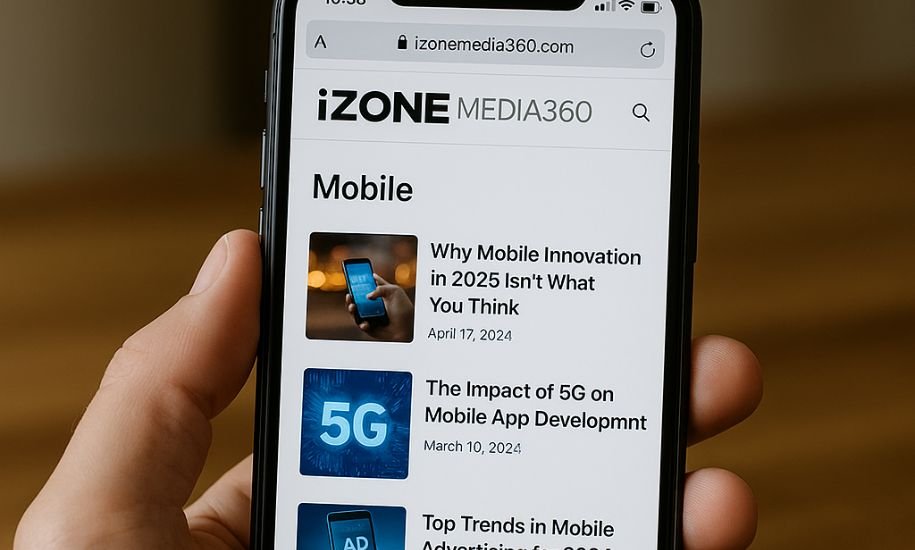
In the fast-moving digital world, mobile-optimized platforms aren’t just convenience tools — they’re the backbone of how most people consume content, manage their businesses, and interact with technology. One platform that has gained increasing attention recently is izonemedia360.com, a tech-focused digital media and marketing hub that publishes content around innovation, startups, branding, mobile technology, and digital strategy. As its popularity grows, so does the curiosity around “izonemedia360.com mobile,” “Izonemedia360 com mobile download,” and “Izonemedia360 com mobile app.”
Yet most people searching for these terms run into the same question:
Is there actually a mobile app for iZoneMedia360? Or is “Mobile” referring to something entirely different?
This long-form guide digs deep into everything available publicly — across blog posts, reviews, tech write-ups, and user queries — to bring clarity to what “izonemedia360.com mobile” truly offers. Whether you are a marketer, a creator, a tech reader, or someone simply curious about whether an app exists, this article covers everything you need to know.
What Is iZoneMedia360?
Before diving into the mobile side of things, it helps to understand what iZoneMedia360 is at its core.
iZoneMedia360 is a digital media platform focused on:
-
Technology news
-
Mobile innovation
-
Digital marketing insights
-
Branding strategies
-
Startup growth
-
Business development tips
-
AI-driven market trends
-
Web and mobile UX strategies
The site publishes expert-style articles designed for readers who want to stay ahead in the tech and media environment. Content ranges from deep dives into mobile innovation to case studies on successful campaigns.
But with growing interest around its mobile optimization and possibly a mobile app, “iZoneMedia360.com Mobile” has become a trending topic — especially among digital marketers who prefer to manage content or insights directly from their phones.
What Does “izonemedia360.com Mobile” Actually Mean?
Here’s the key point most people miss:
There is currently no verified official mobile app for iZoneMedia360 on any major app store.
Despite blog posts from different third-party sites claiming that a downloadable app exists, real checks on:
-
Google Play Store
-
Apple App Store
-
Amazon Appstore
show no official iZoneMedia360 app uploaded by the platform.
So if the app doesn’t exist (at least publicly), what are people referring to when they search for “izonemedia360.com mobile”?
The answer: It refers to the mobile-optimized version of the website and its mobile-friendly tools/features.
The platform seems to emphasize:
-
Mobile responsiveness
-
Fast mobile browsing
-
Mobile-tailored articles
-
Mobile marketing–related tools
-
A UX experience suitable for smartphones
Many blog reviews highlight features like:
-
mobile dashboards
-
analytics tools
-
campaign management
-
mobile marketing insights
…leading some readers to assume there’s a mobile app.
But in reality, these are referring to mobile-optimized web experiences, not an app you download from a store.
Understanding the Confusion Around “Izonemedia360 Com Mobile Download”
Search engines show rising interest in:
-
“Izonemedia360 com mobile download”
-
“Izonemedia360 com mobile app download”
-
“iZoneMedia360 mobile apk”
So why is this happening?
Reason 1: Third-party blogs improperly describe it as an app.
Many auto-generated content sites write generic articles about “how to download the app” without verifying whether the app exists. Some even instruct users to “search for the app in the Play Store,” which is misleading.
Reason 2: The platform publishes mobile-related content.
Because iZoneMedia360 talks a lot about mobile marketing, mobile analytics, and mobile-first web design, readers assume they provide mobile software.
Reason 3: Increasing demand for mobile-based management tools.
Marketers want dashboard access on mobile, so they expect an app. But currently, the platform functions through a browser-based mobile layout.
Reason 4: SEO confusion.
The phrase “mobile download” attracts search traffic, and some sites use it for clicks.
So, to be clear:
**🔍 There is no official iZoneMedia360 mobile app available for download.
What exists is a mobile-friendly version of their website.**
Features of the “Izonemedia360.com Mobile” Web Experience
Even without an app, the mobile website delivers a strong experience. Several blogs and platform updates highlight the following strengths.
Fully Responsive Mobile Interface
The site adjusts fluidly for all screen sizes:
-
Android phones
-
iPhones
-
Tablets
-
Foldable devices
Text reflows automatically, menus adapt to screen width, and articles load cleanly without needing to zoom or scroll horizontally. This is crucial for readers who consume tech content on the go.
Faster Mobile Browsing
iZoneMedia360 places strong emphasis on mobile performance, including:
-
compressed images
-
optimized scripts
-
lightweight mobile layout
-
reduced loading times
-
mobile caching improvements
Certain blogs reviewing the platform highlight that mobile loading times are better than many similar tech news websites.
Mobile-Optimized Articles & Categories
The website includes dedicated mobile-focused categories such as:
-
Mobile Technology
-
Mobile Innovation
-
Mobile Marketing
-
Mobile Startups
When viewed on mobile devices, these categories are presented as card-style blocks, making browsing easier for smartphone users.
Mobile-Friendly Reading Mode
The website prioritizes readability:
-
clean spacing
-
smooth scrolling
-
readable font sizes
-
dark-text-on-light-background format
-
simplified navigation
This makes long tech articles easier to digest — an underrated but essential mobile feature.
Mobile Marketing Insights
One of the most prominent themes on the site is mobile marketing, including:
-
mobile advertising strategies
-
SMS marketing
-
in-app marketing (industry-wide insights)
-
push notifications
-
location-based targeting
-
mobile UX design
These are tailored for marketers, entrepreneurs, and brand strategists.
Real-Time Access to Digital Media Insights
Even without an app, the mobile site lets users:
-
read latest marketing trends
-
access tech updates
-
explore digital strategy guides
-
stay informed on mobile advancements
This real-time accessibility is the reason many users treat the mobile site as though it were an app.
Is an iZoneMedia360 Mobile App Coming Soon?
There is no confirmed announcement from the platform, but multiple blogs speculate about the possibility. Why?
-
Increased interest in mobile content management tools
-
Growing platform popularity
-
More traffic coming from smartphones
-
Industry trend of media sites launching companion apps
A future app could feature:
-
saved articles
-
offline reading
-
push notifications
-
mobile analytics alerts
-
creator dashboards
But until the platform officially confirms it, the safest conclusion is:
There is no official “Izonemedia360.com mobile app” available yet — only a mobile web experience.
How to Access iZoneMedia360 on Mobile (No Download Needed)
Since there is no app — accessing the platform on mobile is easy:
1. Open any browser on your smartphone
Chrome, Safari, Firefox, Samsung Internet, etc.
2. Browse the site normally
You’ll automatically be served the mobile layout.
3. (Optional) Add the site to your home screen
This gives you an app-like icon, making access one tap away.
On Chrome:
-
Tap ⋮ Menu
-
Tap Add to Home Screen
-
Confirm.
On Safari (iPhone):
-
Tap Share Icon
-
Tap Add to Home Screen
Now the experience feels even more like an app.
Why the iZoneMedia360 Mobile Experience Matters
Even without an app, the platform’s mobile experience is valuable for:
1. Marketers who read insights on the go
Marketing professionals depend on real-time updates.
2. Startup founders
Mobile content helps leaders stay agile.
3. Tech readers
Mobile is the #1 way most users consume tech articles today.
4. Creators and media professionals
It provides inspiration and up-to-date trends.
5. Students and researchers
Quick mobile browsing supports class projects or research topics.
Pros & Cons of the Current Mobile Experience
✔️ Pros
-
No installation needed
-
Works on all devices
-
Loads quickly
-
Clean reading layout
-
Constantly updated tech content
-
Easy navigation
✘ Cons
-
No offline reading
-
No push notifications
-
No personalized saved-article space
-
No dedicated mobile dashboard features
If the platform launches an app in the future, many of these limitations would disappear — but for now, the mobile website is the main way to access the service.
Should You Trust Third-Party Download Links?
Absolutely not.
If you ever see:
-
“iZoneMedia360 Mobile APK Download”
-
“Download iZoneMedia360 App for Android”
-
“iZoneMedia360 App Mod APK”
Avoid these.
They are:
-
Not official
-
Potentially harmful
-
Likely malware
-
Often fake
Only download apps from:
-
Google Play
-
Apple’s App Store
Since the official app does not exist, any APK is automatically suspicious.
Final Thoughts on iZoneMedia360.com Mobile
The growing interest around “izonemedia360.com mobile,” “Izonemedia360 com mobile download,” and “Izonemedia360 com mobile app” shows that users want more mobile-centric experiences. While there isn’t an official app available yet, the mobile website itself is strong, responsive, and optimized for reading and tech learning.
iZoneMedia360 provides deep insights into mobile innovation, digital strategy, marketing trends, and business growth — all of which make its mobile version valuable even without an app.
As mobile usage continues to dominate digital consumption, platforms like iZoneMedia360 will likely expand further into the mobile environment. Whether that eventually leads to an official app is something to watch closely in the coming months.
This article is proudly presented by American Times, continuing our mission to bring clear, trustworthy, deeply researched tech explanations to readers who want the real story — not confusing SEO noise.
You may also visit: Wattip: Smart Energy Monitoring for a Greener Home