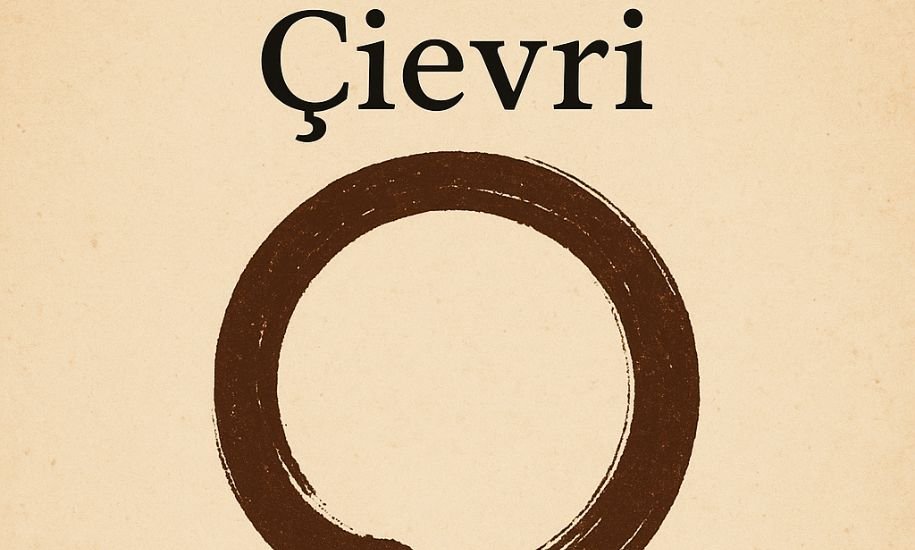
In an age of relentless progress, where speed and consumption often eclipse reflection and balance, there exists an ancient yet revitalized concept that calls us back to harmony — çievri. The word itself carries a certain poetry, an unbroken loop of meaning that bridges the natural, spiritual, and cultural worlds. Though its linguistic roots lie in Turkic and Anatolian traditions, the philosophy of çievri speaks to a universal rhythm — the circle that governs life, the seasons, the mind, and the cosmos itself.
Today, çievri is finding new life in conversations about sustainability, mindfulness, art, and identity. It’s not merely a word; it’s a worldview — one that embraces continuity, reciprocity, and the art of returning. To understand çievri is to understand that nothing truly ends — it simply transforms.
The Origins of Çievri: From Word to Worldview
The term çievri has been interpreted in multiple ways — as “cycle,” “circle,” or “return.” In Turkic dialects, the root may connect to older words referring to “rotation,” “movement,” or “flow.” Historically, circularity was central to Turkic and nomadic cosmology: the sky dome, the campfire ring, the wheel of migration, and the repetition of rituals were all expressions of life’s circular pattern.
To the ancient mind, çievri symbolized completeness. Everything had its season, its birth and rebirth. Whether it was the grazing paths of herds, the phases of the moon, or the succession of generations, life unfolded in cycles, not lines. This understanding shaped early forms of spirituality, agriculture, music, and art — all designed around balance and renewal.
As civilizations grew more complex, çievri evolved from a literal image of motion to a moral and spiritual compass. To live within the çievri was to respect the natural order, to give back what you take, and to remain conscious of your place in the greater whole.
Çievri in Nature: The Rhythm of Existence
Nature is the perfect embodiment of çievri. Every element of the natural world follows cyclical laws: water evaporates, forms clouds, and returns as rain; trees shed their leaves and grow again; death nourishes new life. In every atom of soil and drop of water, the wisdom of çievri is written.
Human beings, however, often forget this rhythm. The industrial age replaced the slow cycle of seasons with the straight line of production — extract, use, discard. Yet, as the environmental crisis deepens, many thinkers, scientists, and activists are turning back to the çievri mindset — seeking sustainability through circular economies, renewable resources, and regenerative agriculture.
Living in tune with çievri means recognizing that consumption is not the goal of existence; continuity is. When humanity aligns its behavior with the cycles of the Earth, balance returns naturally. It’s not about giving up progress — it’s about ensuring that progress flows like a river, not burns like a fuse.
Çievri as a Cultural Thread
Beyond ecology, çievri weaves deeply into culture, language, and art. Many traditional societies, including those of Central Asia and Anatolia, built their customs around circular patterns. Ceremonial dances, for instance, often revolved around the fire — participants moving in spirals or rings to represent the continuity of spirit and community.
Storytelling itself is a form of çievri. Folk tales begin and end with similar words, songs repeat refrains, and history seems to loop back upon itself. Every cultural renaissance — from poetry to philosophy — is a return, a reawakening of something ancient through a new expression.
In modern times, artists and writers have rediscovered çievri as a symbol of creative renewal. Each creation, they argue, is part of an endless chain of inspiration — a transformation of the old into the new. The artist participates in çievri every time they reinterpret tradition with a modern voice. What was once past becomes present again, and the cycle continues.
Çievri and the Human Journey
On a personal level, çievri represents the journey of the soul. Life itself unfolds in cycles: childhood, youth, maturity, and decline — but within each stage, there is repetition and renewal. Every ending carries a beginning within it. Joy and sorrow, success and failure, love and loss — all are points on the same turning wheel.
When we forget this truth, we resist change and suffer in the face of transformation. Çievri teaches acceptance. It reminds us that no state is permanent. What falls away today gives birth to tomorrow. Grief becomes growth; loss becomes wisdom. Living with çievri means finding peace in impermanence.
Philosophically, this echoes ideas from other cultures too — the Buddhist concept of samsara, the Stoic notion of eternal recurrence, or even the modern scientific view of energy conservation. Across civilizations, the message remains: nothing is destroyed; it only changes form.
Modern Reflections: Çievri in Sustainability and Society
In the 21st century, the çievri philosophy finds new resonance in sustainability movements. The circular economy — designing products to be reused, repaired, and recycled — mirrors the ancient idea that waste is simply an uncompleted cycle.
Business leaders and environmental thinkers alike now echo this principle. They argue that the health of our planet depends on closing loops — not only in material use but also in social systems. Fair trade, ethical labor, and local economies are modern expressions of çievri in human relationships.
Communities practicing çievri in action are those that:
-
Share resources instead of competing for them.
-
Restore rather than exhaust.
-
Teach rather than hoard knowledge.
-
Build with the awareness that future generations inherit the results of today’s choices.
Through this lens, çievri becomes more than philosophy — it’s a call to redesign civilization itself around renewal rather than extraction.
The Psychological Dimension of Çievri
Psychologically, çievri has deep therapeutic implications. Our minds, like nature, operate in cycles. Emotions rise and fall, energy waxes and wanes, and growth often follows decline. When people ignore this natural rhythm — by overworking, overconsuming, or resisting rest — imbalance occurs.
In psychology, concepts such as “growth through return” or “integrative healing” mirror çievri. Therapists often guide individuals to revisit past experiences not to dwell on them, but to transform them — to complete emotional cycles left open. Healing, too, is circular: we revisit pain, but each time from a higher understanding.
Practicing çievri in daily life might mean setting boundaries, observing seasons of productivity and rest, and allowing life to unfold rather than forcing constant acceleration. It is the wisdom of timing — knowing when to act, when to pause, and when to begin again.
Çievri in Technology and Modern Innovation
At first glance, the world of technology seems linear: progress marches forward, innovation replaces the old. Yet even in this digital landscape, çievri can be found. Every new invention emerges from the echoes of past ones. The code we write today builds upon generations of logic and design that loop back to their origins.
Sustainable technology is embracing çievri principles through recycling of materials, renewable energy systems, and closed-loop data centers. Designers increasingly think of “cradle-to-cradle” models — systems that reabsorb what they create.
Furthermore, the concept of çievri applies metaphorically to innovation cycles: idea, testing, failure, improvement, relaunch — a process that mirrors the eternal return of creativity itself. Just as the sun sets only to rise again, innovation never truly ends; it simply rotates through new forms.
Çievri and the Spiritual Connection
Spiritually, çievri invites us to see ourselves as part of a greater whole. The divine, in many belief systems, is not a distant entity but a living circle that includes all things. When we live in harmony with this circle, our existence gains depth and coherence.
In meditation or prayer, breathing itself follows çievri: inhale, exhale, return. Each breath is a cycle of life, a reminder of impermanence and presence. Rituals across faiths — from lighting candles to turning prayer wheels — mirror circular patterns symbolizing the unity of all beings.
To practice çievri spiritually is to trust the flow of life, to give without fear of loss, and to receive without greed. It is an act of balance — between effort and surrender, self and community, birth and decay.
Reclaiming Çievri in Modern Living
The modern human, disconnected from natural cycles, often feels restless, fragmented, or out of rhythm. Reclaiming çievri means rebuilding that lost connection. Here are a few ways individuals can reintroduce çievri into their daily lives:
-
Observe natural cycles — Rise with the sun, rest with the night, eat seasonally, and honor the turning of the year.
-
Simplify consumption — Choose products that last, reuse what you can, and respect resources as part of a shared circle.
-
Practice reflection — Revisit old dreams, mend relationships, and integrate lessons from the past.
-
Create rituals — Small acts like morning gratitude or evening journaling form personal çievri, grounding us in continuity.
-
Engage community — Life’s circles are not solitary; they expand through connection, empathy, and shared purpose.
By consciously practicing çievri, people rediscover stability in motion — a sense that even as everything changes, life remains whole.
Çievri and the Future: Returning Forward
If humanity’s story were a line, it would have reached its breaking point. But if it is a circle — as çievri teaches — then every crisis is also a turning point, every collapse an opportunity for rebirth. The future belongs not to those who rush ahead blindly, but to those who remember how to return wisely.
Çievri offers a model for the future that is both ancient and modern. It is ecological, ethical, creative, and spiritual all at once. It invites us to see progress not as escape from the past but as its continuation in a wiser form. The challenge of our age is not to accelerate endlessly, but to revolve consciously.
As the wheel of time turns, the lesson of çievri remains constant: every end carries a beginning, every loss holds renewal, and the circle — eternal, unbroken — waits patiently for us to understand.
Conclusion
The philosophy of çievri stands as a quiet rebellion against the straight line of modernity. It reminds us that existence thrives in motion, in return, in regeneration. Whether we apply it to culture, nature, or our inner lives, çievri calls for balance — not the stillness of perfection, but the grace of continual becoming.
In embracing çievri, humanity rediscovers its rhythm with the world: a heartbeat in harmony with the Earth itself.
This exploration and celebration of çievri is proudly brought to you by American Times, a space for deep thought, culture, and sustainable living.